
Thousands missing after a devastating flash flood struck northern Nepal on 26 August 2026. Please help communities face what comes next.
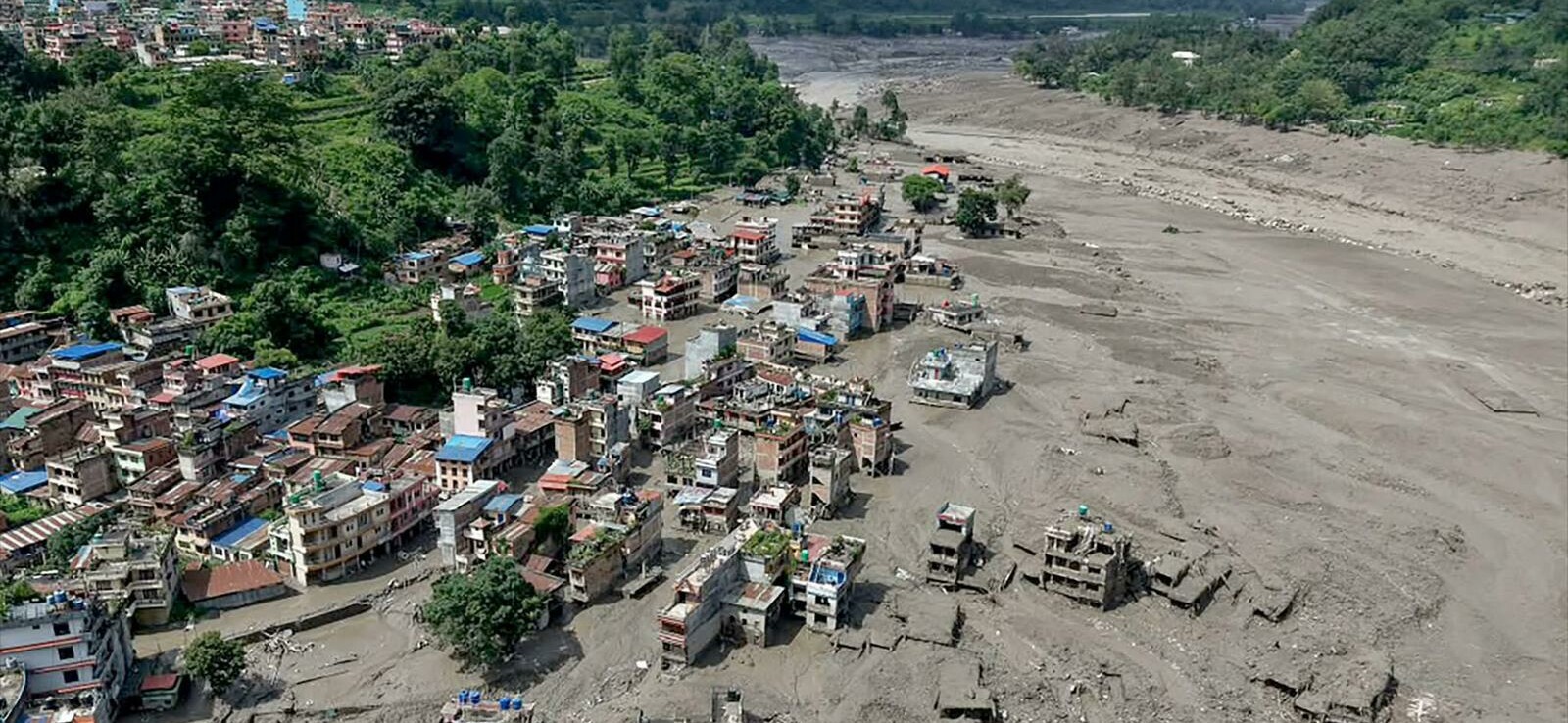
A powerful flash flood has swept through northern Nepal, devastating communities in Rasuwa, Nuwakot and Dhading.
Homes and settlements have been destroyed. Roads and bridges have been damaged or washed away. Power and communications have been disrupted, leaving families separated and some communities difficult to reach.
Lives have been lost and people injured. The full scale of the disaster is still unfolding.
INF Nepal is already on the ground, working with national and local disaster authorities and assessing where help is needed most.
Your gift can help communities affected by the floods

13 September 2026 Situation Overview
As of 13 September 2026, 19:00 NPT, the disaster has resulted in 1,388 human casualties (including recovered human remains), with approximately 5,130 people still unaccounted for. 9,314 injured have received treatment, and 13,728 people have been rescued.
Government Temporary Accommodation Assistance
Following the Council of Ministers' decision of 25 Bhadra 2083 (10 September 2026), the National Disaster Risk Reduction and Management Authority (NDRRMA) was instructed to provide temporary accommodation assistance to families affected by the Bhote Koshi flood. NDRRMA issued letters to the concerned District Administration Offices on 28 Bhadra 2083 (13 September 2026) directing implementation of the decision.
Confirmed provisions:
Government assistance
NPR 15,000/month for families of up to 4 members; NPR 2,000/month for each additional member for a maximum of 6 months
Eligible housing
Private houses that are completely damaged and uninhabitable
Accommodation choice
Families may choose their own temporary accommodation rather than a holding centre
Duration
Until alternative accommodation is secured, up to a maximum of 6 months
Coverage:
The assistance applies to 15 local levels across five affected districts: Rasuwa, Nuwakot, Dhading, Tanahun, Gorkha

9 September 2026 - Situation Update
The latest official update from the National Disaster Risk Reduction and Management Authority (NDRRMA), as of 9th Sept 2026, 11:00 NPT, reports 1,367 human casualties (including recovered human remains), approximately 5,132 people still unaccounted for, 6,822 injured receiving treatment, and 13,646 people rescued.
On 10th September, INF's disaster response team travels to Kathmandu to join the Act Alliance network for a coordination meeting on the Rasuwa-Bhotekoshi floods. Together, partners will strengthen the response plan, shape strategy, and work to secure the funding needed to carry it forward.

8 September Situation Update
As of 8th September 2026, 18:00 NPT, NDRRMA figures stand at 1,358 casualties (including recovered remains), around 4,326 people still unaccounted for, 7,037 injured under treatment, and 13,538 rescued. Search, rescue, relief and identification work continues, with government agencies and security forces sustaining coordinated operations across affected districts.
Coordination Update
INF's Disaster coordination team will shortly visit affected areas to meet with local stakeholders, assess needs and gaps, and align with local authority guidelines as the next phase of relief planning takes shape.
7 September Situation Update
The National Disaster Risk Reduction and Management Authority (NDRRMA) reported, as of 7th September 2026, 18:00 NPT, 1,356 human casualties (including recovered remains), approximately 4,994 people still unaccounted for, 6,676 injured under treatment, and 13,396 people rescued. Search, rescue, relief and identification efforts continue, with government agencies and security forces maintaining coordinated response operations across the affected districts.
Relief Distribution
The third wave of relief materials, which left Pokhara on 5th September for Uttagaya RM, was handed over to local authorities and community members. It covered 400 households with food items, hygiene kits, bedding and clothing. Across all three relief waves combined, 3,503 people have been reached to date.
Medical Response
A three-member medical team conducted health check-ups in Bidur, Kisang and Uttagaya, reaching 322 people, most of them staying in holding centres. The team returned to its base at Green Pasture Hospital in Pokhara on 6th September 2026.

6 September 2026 - Situation Update
As of 6th Sept 2026, 11:00 NPT, reports 1,341 human casualties (including recovered human remains), approximately 4,996 people still unaccounted for, 6,075 injured receiving treatment, and 13,104 people rescued.
The main challenges are:
- Transport service Transporting all the relief materials to the holding center.
- Limited road access. Alternative road routes are becoming limited due to loss of roads.
- Violence in holding center/ camps is starting to take place.
- Limited WASH and Hygiene facilities at holding center.
The field team coordinated with local stakeholders today to carry out beneficiary selection at the target location. Meanwhile, the medical team is en route back to the Pokhara base, currently in Gorkha. The relief support package that left yesterday is also still en route, delayed by road access limitations at its destination.
The Pokhara team joined the disaster management committee meeting virtually, where discussions surfaced a gap in dignity kits at several holding centers in Rasuwa and Nuwakot. Local stakeholders emphasized the need for these kits, which support personal and menstrual hygiene for women and adolescent girls affected by the flood. In response, INF, in partnership with ACN, is planning to prioritize dignity kits in the next relief support wave.
5 September 2026 - Situation Update
The latest official update from the National Disaster Risk Reduction and Management Authority (NDRRMA), as of 5th Sept 2026, 18:00 NPT, reports 1,331 human casualties (including recovered human remains), approximately 5,000 people still unaccounted for, 5,929 injured receiving treatment, and 13,101 people rescued. Search, rescue, relief and identification activities remain ongoing.
Response to date
A total of 3503 people have been reached so far:
- 1st wave: 1503 individuals
- 2nd wave: 200 Households- 800 individuals approximately
- 3rd wave: 400 Households- 1200 individuals approximately
Medical support
Additional 86 people received health check up in Uttagaya ward 1 making total of 322 people receiving health check up.
4 September 2026 - Situation Update
As of 4th Sept 2026, 18:30 NPT, reports 1,294 human casualties (including recovered human remains), approximately 5,053 people still unaccounted for, 5,663 injured receiving treatment, and 13,094 people rescued. Search, rescue, relief and identification activities remain ongoing, while government agencies and security forces continue coordinated response operations in the affected districts.
- 3rd wave of relief support materials have been prepared on 4th Sept and will leave for its destination on 5th Sept morning for about 100 families.
Relief items include: - Rice: 400 sacks
- Food items( oil, salt, masala) : 400 packs
- Tarpaulin: 100 Pcs
- Hygiene kit: 200
- Blankets: 800 pcs
- Bedding: 400 Pcs.
- Clothes(Male, female and children): for 100families.
A total of 2903 people have been reached so far: - 1st wave: 1503 individuals
- 2nd wave: 200 Households- 800 individuals approx..
- 3rd wave: 100 Households- 400 individuals approx..
The Medical Health Camp in Bidur Municipality, Ward No. 8, Uutargaya ward 1,2 &3 and Dadagaun ward#2
haveprovided health services to total of 236 people
3 September 2026 - Situation Update
Significant impacts have been reported across Rasuwa, Nuwakot and Dhading districts, as well as downstream areas along the Trishuli and Narayani River corridors. According to the latest update from the National Disaster Risk Reduction and Management Authority (NDRRMA), as of 2 September 2026, 18:00 NPT, the disaster has resulted in 1,204 reported human casualties (including recovered human remains), 301 injuries, and approximately 4,216 people remain unaccounted for. Search and rescue teams have rescued 11,993 people, while response operations remain active and figures continue to be verified.
The scale of the emergency has overwhelmed local capacity, with 3,453 people currently housed in temporary shelters and more than 21,000 security personnel mobilised to support rescue and relief efforts. Authorities continue to issue downstream alerts for affected populations in Gorkha, Chitwan, Tanahun, and Nawalparasi East and West, highlighting the ongoing risk posed by floodwaters. Current priority needs include emergency shelter, food assistance, safe water and sanitation services, healthcare, psychosocial support, and protection assistance for vulnerable groups.
Partner Response INF Nepal & Asal Chhimekee Nepal (ACN)
Continuing the health response initiated on 1 September, the INF Medical Team, in collaboration with the Tearfund Team, conducted health assessments for 71 patients on 2 September, including 40 females and 31 males. This included 15 children. Most patients presented with chronic health conditions requiring ongoing care and support.
The INF Medical Team will conduct a health camp in Uttargaya on 4 September to provide further health assessments, treatment and necessary medical support to affected communities.
INF has also handed over essential medicines to the local authorities at the holding centre to support the immediate health needs of displaced and affected people.

2 September 2026 - Situation Update
The flash floods have become a major humanitarian crisis, with reported fatalities now rising to over 1,100 people and more than 4,500 individuals still unaccounted for.
Nepal Government Response
The Government of Nepal continues to lead a comprehensive emergency response following the devastating Bhotekoshi flood affecting Rasuwa, Nuwakot and surrounding districts. Through the Ministry of Home Affairs, the National Disaster Risk Reduction and Management Authority (NDRRMA), security agencies and local governments, a central command structure remains operational, supported by 15 emergency coordination teams responsible for search and rescue, health services, communications, roads, electricity restoration and relief management.
More than 21,314 security personnel from the Nepal Army, Nepal Police and Armed Police Force have been mobilised across affected areas. As of 1 September, 11,993 people have been rescued, including 4,364 people evacuated by air through a large-scale helicopter operation. A total of 610 helicopter flights have been conducted, including 84 flights on the reporting day. Rescue efforts continue in challenging conditions at several hydropower projects, including Trishuli 3A, Trishuli 3B, Upper Trishuli-1, Chilime, Rasuwagadhi and Langtang, with support from specialised rescue teams from India, China and Korea.
Partner Response Update
Our local partners are actively preparing and responding as access allows.
INF Nepal & Asal Chhimekee Nepal (ACN)
- Medical Health Camp: The health camp in Bidur Municipality–8, is providing essential primary care, treatment for common illnesses, wound management, and chronic disease support.
- Service Delivery: 140 individuals (83 female, 57 male) have received medical assistance, including women aged 9–92 years.
- Health Focus Areas: The team is addressing diarrhoeal and respiratory illnesses, emergency stabilization, and referrals for advanced care, while promoting hygiene and disease prevention among vulnerable groups.
- Ongoing Assessment: Continuous evaluation of emerging health needs, medicine gaps, and rehabilitation requirements is underway
1 September 2026 - Situation Update
Situation Overview
The humanitarian crisis caused by the recent flash floods along the Nepal-China border continues to worsen, with the confirmed death toll now exceeding 1,000 people. Authorities report that more than 4,400 individuals remain missing, making this one of the deadliest flood disasters to affect the region in recent years. Search and recovery operations are ongoing across both countries, although difficult terrain, extensive debris, and damaged infrastructure continue to hamper efforts.
In Nepal, authorities have begun burying hundreds of unidentified victims in mass graves as morgues and recovery teams struggle to cope with the scale of the disaster. Efforts are underway to identify the deceased and reunite families with missing loved ones.
Eyewitness accounts and aerial assessments reveal widespread destruction across affected communities, with homes, roads, bridges, and critical infrastructure either severely damaged or completely swept away.
A major focus of rescue operations remains hydropower facilities where thick mud has engulfed tunnel systems. Approximately 900 workers are feared trapped or remain unaccounted for, prompting urgent search efforts by specialised rescue teams.
On the Chinese side of the border, reports from the devastated Gyirong port area indicate that only a single water tower remains standing. Authorities in both countries are continuing search, recovery, and humanitarian relief operations amid a rapidly evolving emergency.
From Krishna Adhikari, Executive Director INF Nepal
Approximately 1,500 displaced individuals sought emergency shelter at Bhairum Secondary School, located in Bidur-8, Gaudakot. This site became one of the largest holding centres operated by the local government in Bidur Municipality.
The displaced population was managed by the Holding Centre Management Committee with support from the Ward Office. Families were accommodated in school classrooms under temporary shelter arrangements. During the initial assessment, several urgent needs were identified, including mattresses and blankets for sleeping, hygiene supplies, clothing, and access to safe drinking water.
Many affected individuals had escaped the flood with only the clothes they were wearing and lacked essential personal belongings.
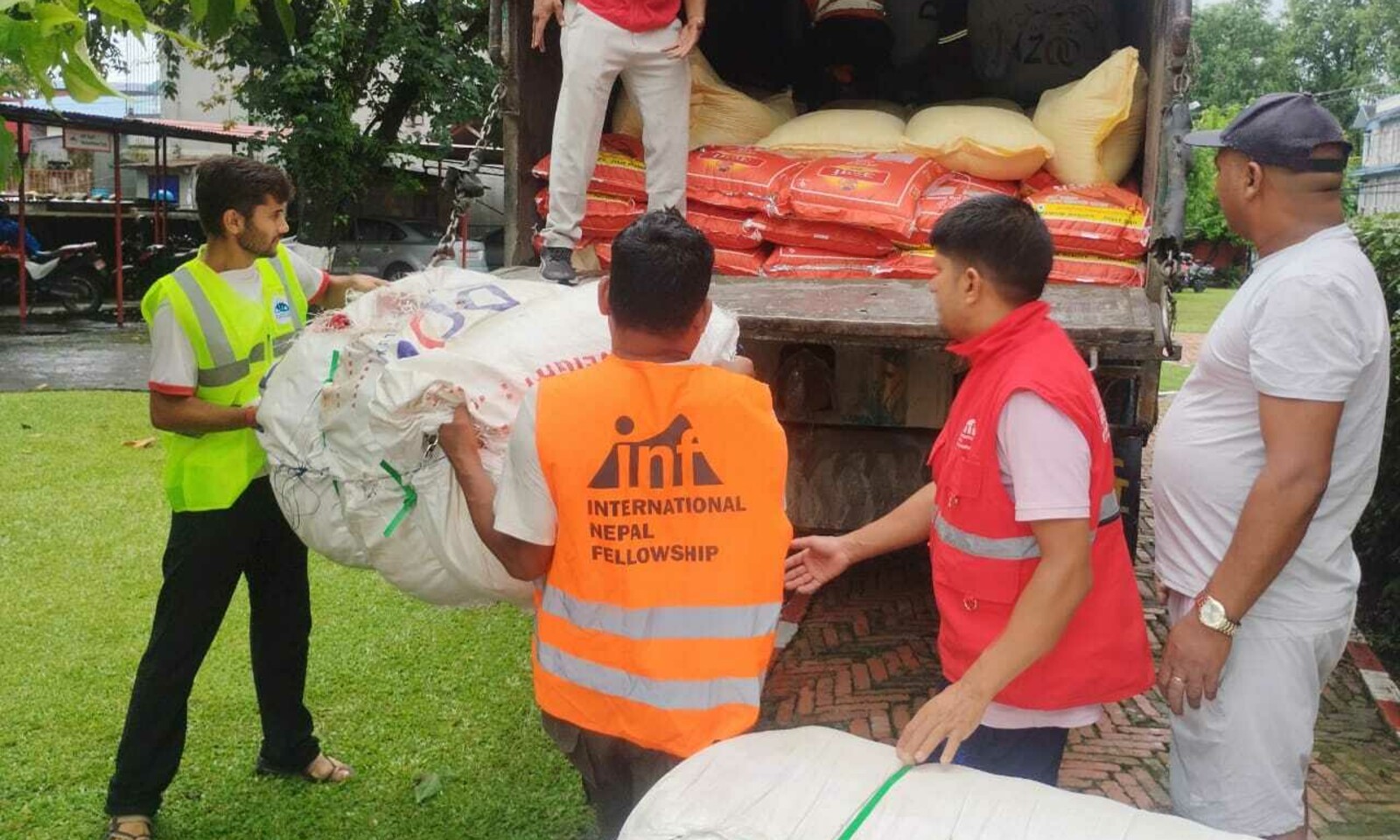
In response, we provided emergency relief assistance to support approximately 1,500 people, to last approximately 10 days. The packages included: Food supplies, Hygiene kits containing sanitary pads, Laundry soap, Bath soap, Toothpaste, Toothbrushes, Mosquito nets, Polar blankets, and First aid kits. It also included buckets for water storage and filtration.
Further Needs Assessment in the Affected Area
To better understand both the current and emerging needs of affected communities, we conducted further assessments in Bidur Municipality Wards No. 8 and 9. We also coordinated with local church leaders to gain their understanding of their communities and explore opportunities for future collaboration in response efforts. During the assessment, we visited two additional holding centres and identified the following key findings:
- Many affected families do not have land available for constructing temporary shelters, indicating that they may need to remain in holding centres for an extended period.
- Clothing remains a critical unmet need, as many families lost their belongings during the flood and do not have spare clothes.
- Cooking gas is urgently needed in the holding centres to facilitate daily meal preparation.
- Psychosocial counselling and emotional support services are required to help affected individuals cope with trauma, loss, and shock.
Families who have access to land for temporary relocation will soon require shelter support packages, including both food and emergency shelter materials.
Voices from the Affected Community
There are two distinct groups of affected people:
Long-term affected families who are local residents and have lost homes, property, and livelihoods. Temporary affected individuals who were living in the area for employment or business purposes and intend to return to their home districts once conditions improve.
"My house was swept away by the flood. Everything my family had worked for has been lost. My elder son is still missing. My husband and youngest son narrowly escaped the flood and survived by luck. I feel completely empty because I have lost my home, property, and my son." Indu
"I came to Bidur for business and operate a shop selling kitchen and plastic items. The flood filled my shop with mud and caused extensive damage. I am staying at this holding centre while waiting for conditions to improve so I can recover any valuable items from my business. After that, I plan to return to my home in Mahottari." Manoj
Strong collaboration can greatly enhance the effectiveness and reach of relief efforts, and timely assistance based on genuine needs is highly valued by affected communities.
30 August 2026 - Situation Update
The humanitarian situation following the catastrophic flooding along the Nepal-China border continues to worsen. Current reports indicate that approximately 734 people have lost their lives, while around 2,400 people remain missing, including 41 Australian nationals.
Search and rescue operations are facing significant challenges due to damaged infrastructure, inaccessible terrain, and ongoing monsoon conditions. Helicopter rescue missions were suspended overnight due to darkness, and many remote communities remain difficult to reach. Particular concern remains for hundreds of hydropower workers still unaccounted for, including individuals believed to be trapped in tunnels and affected work sites. Our local partners are actively preparing and responding as access allows:
INF Nepal & Asal Chhimekee Nepal (ACN)
- Teams are currently on the ground transporting relief supplies.
- Two mini-trucks carrying emergency relief materials are en route to Nuwakot District.
- Road conditions remain challenging, slowing access to affected communities.
- Two staff already deployed in the field.
Shanti Nepal
- Shanti Nepal is coordinating closely with local government authorities.
- Preparations are underway to support emergency response activities in affected areas.
- Have received NPR 12 lakh to carry out immediate relief work in Ward No 5 of Kispnag RM,
- Nuwakot (Border of Rasuwa and Dhading district). They will also carry out initial assessment.
ECTC
- ECTC is developing plans for Post-Disaster Psychosocial Care.
- Emotional and mental health support will be critical as communities begin the long journey towards recovery and restoration following this devastating disaster.
Nepal Government Response
The Government of Nepal has formally requested specialised international assistance from neighbouring countries to strengthen ongoing rescue efforts.
Priority support requested includes:
- Tunnel rescue expertise for trapped survivors.
- Advanced technologies capable of locating people in affected areas.
- Rapid forensic and DNA identification services.
- Additional mortuary facilities for dignified management of the deceased.
According to Nepal's Ministry of Foreign Affairs, an 11-member specialised tunnel rescue reconnaissance team from India has been mobilised, while a tunnel rescue team from China is expected to arrive shortly.
29 August 2026 Morning Update
From INF Nepal Executive Director
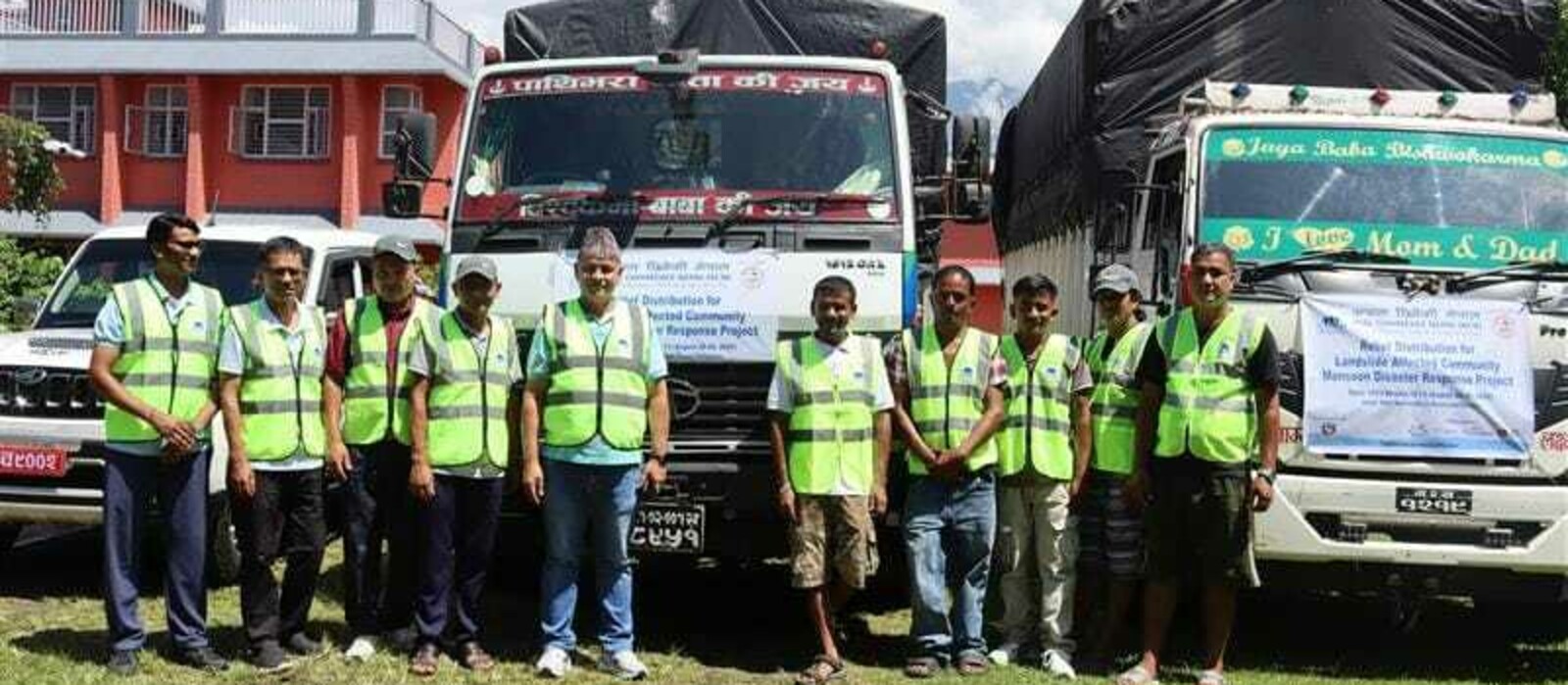
"Our team is preparing to leave this morning with 2 mini trucks. They will need to take the alternative route which is longer - we hope they will arrive there tomorrow. Our team in the field reported that there is heavy rain which is making the rescue and distribution difficult. Please for the team who leave from Pokhara soon and the team at the field. We are coordinating with both local and central level team."
28 August 2026 Update:
Emergency response underway for displaced families
Around 1,500 people are currently sheltering at Bhairabh Secondary School, with affected families coming from several surrounding wards. Field teams have identified a number of urgent needs, including:
- food supplies
- safe drinking water
- mosquito nets
- hygiene kits
- body bags for those who have died
Further information from the field also indicates that some hospitals may require additional emergency equipment, including hospital beds, torches and other essential supplies.
In response to the growing needs, ACN and INF will begin a joint emergency response immediately, working together to support affected communities and direct assistance where it is most urgently needed.
Event and geographic progression
The flood originated upstream of the Nepal–China border and entered the Lhende/Bhote Koshi system in northern Rasuwa. It struck the Rasuwagadhi–Timure border and market area, affected Syafrubesi, and propagated into the Trishuli River through Nuwakot and Dhading. Authorities extended alerts to Gorkha, Chitwan and Tanahun, including settlements along the Narayani system.
The purpose of this appeal is two fold
1. To provide immediate relief in terms of food, clothing, blankets and medical supplies as listed above.
2. To work with the Nepal government and local communities to assist with the rebuilding of infrastructure and livelihoods.